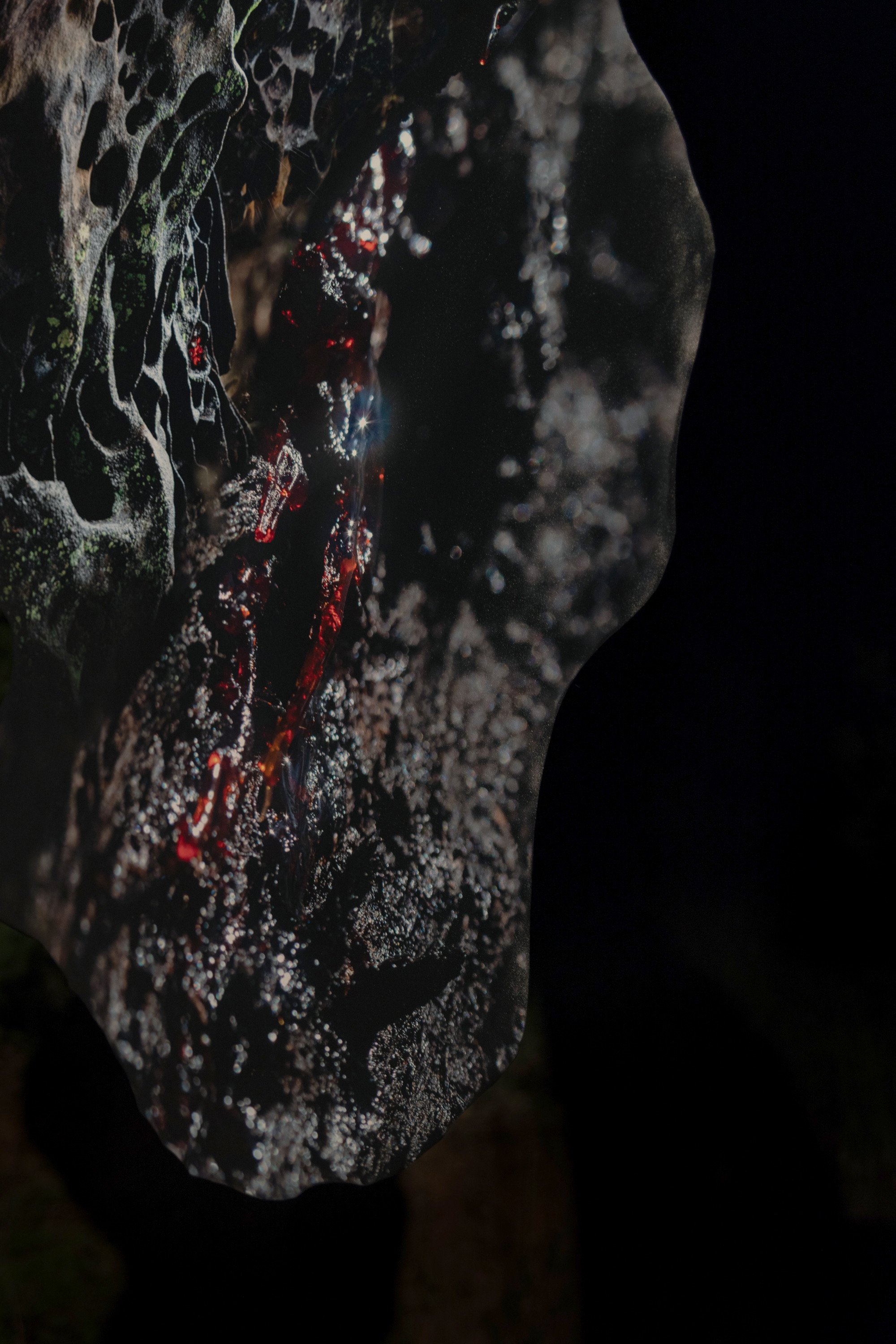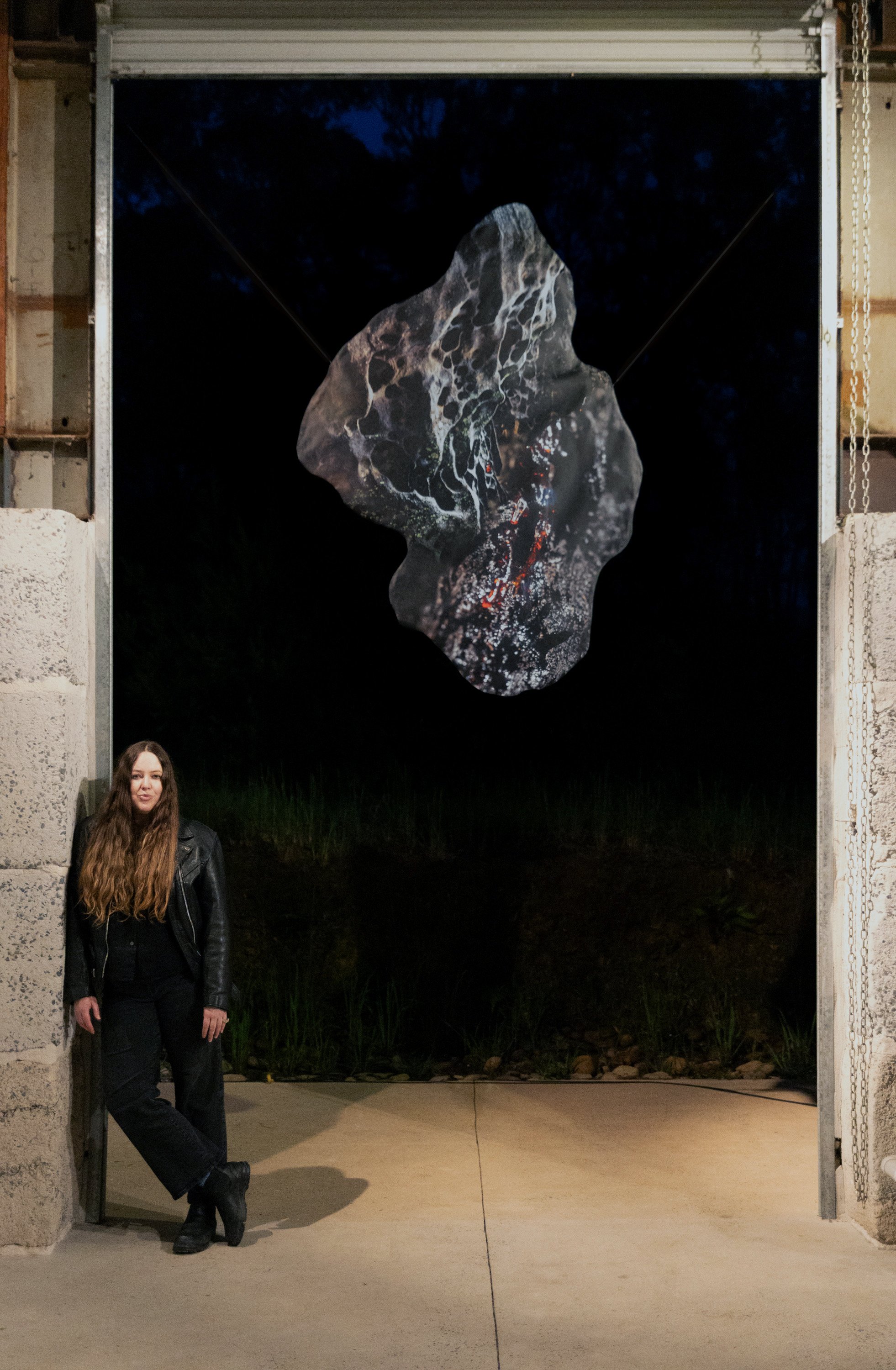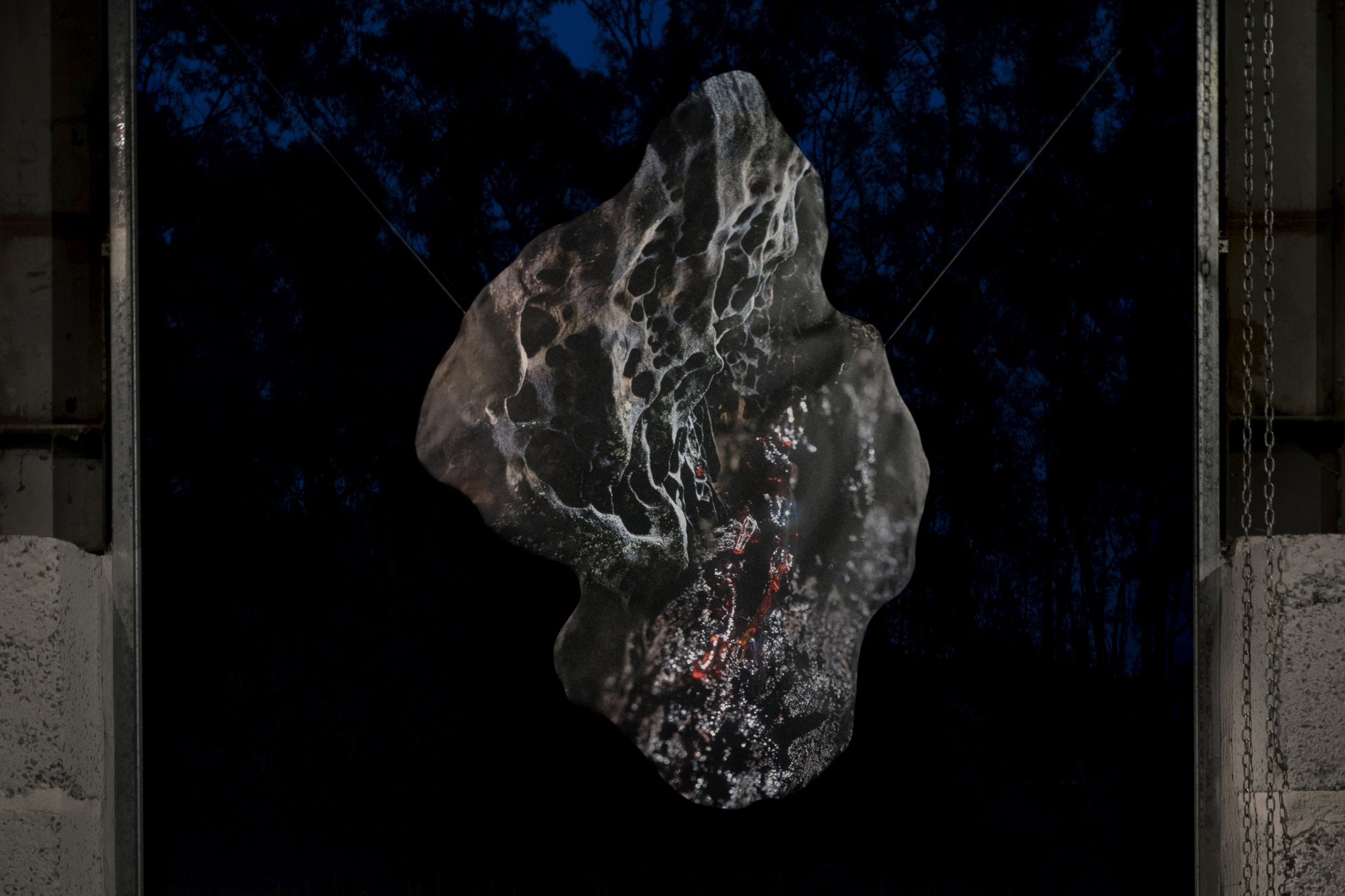
Primordial Goblet, 2026
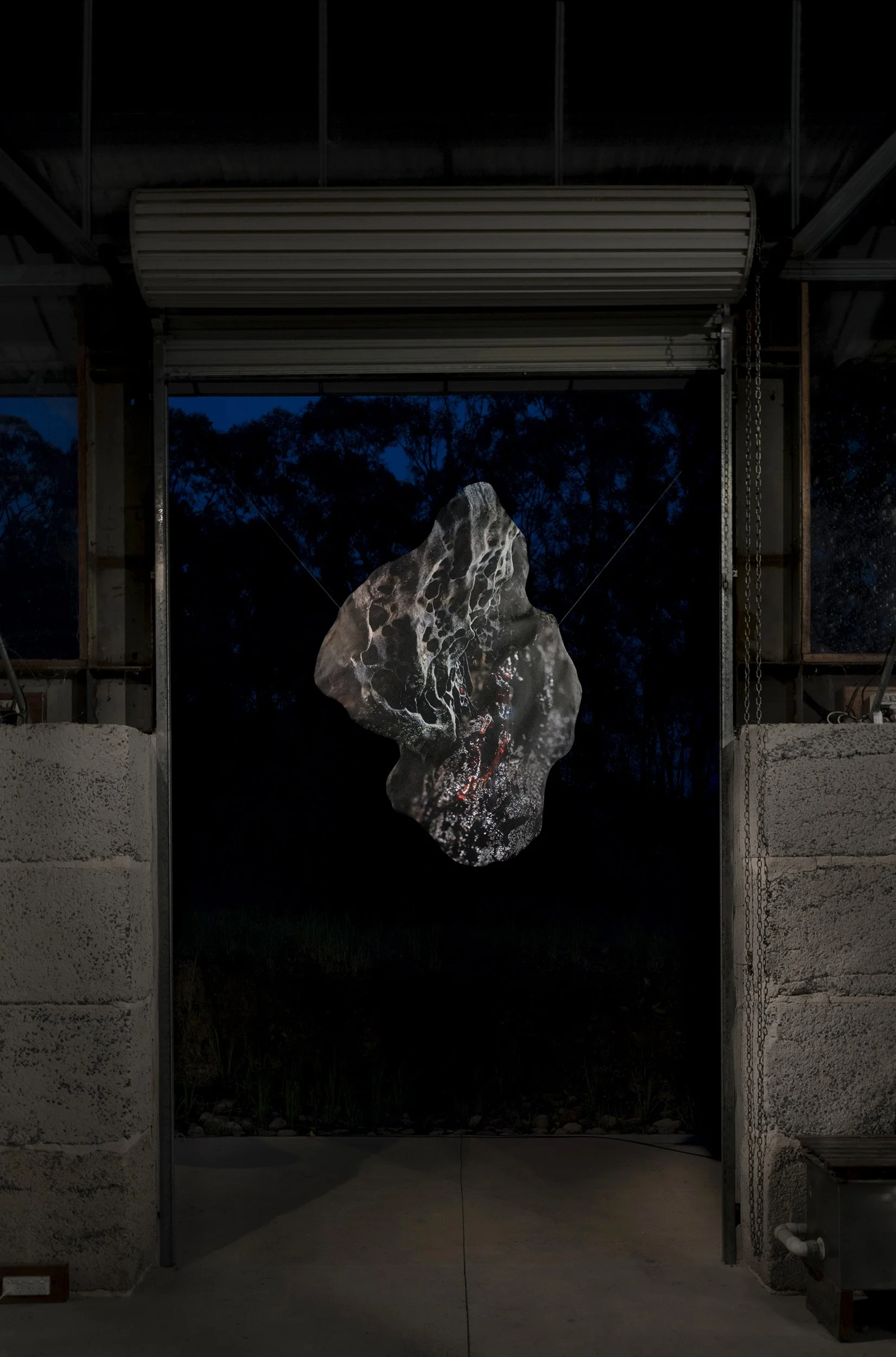
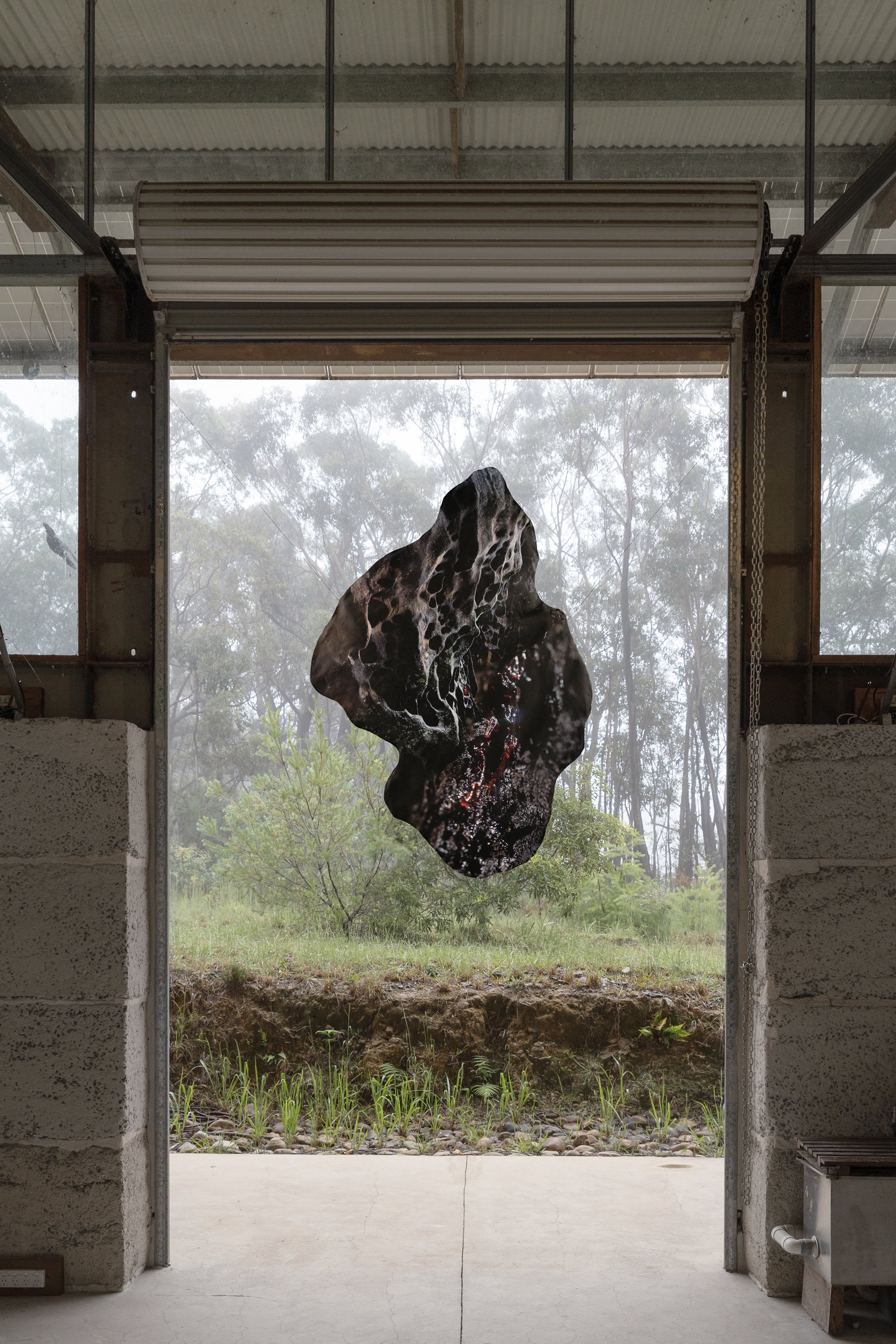
Primordial Goblet, 2026. 70” x 50” x 2.” UV print on canvas, flyscreen, tarpaulin, wood, aircraft cable
Installed in Bilpin, NSW, Australia for the Environmental Art Award at Bilpin International Ground for Creative Initiatives (BigCi). The open wall is adjacent to Wollemi National Park, looking out towards eucalyptus trees visited by wild cockatoos, kookaburras, and rosellas. The greater Blue Mountain region is named for to the airborne eucalyptus oils of the forests, which thicken the air with a blue haze (shown in the morning mist, right).
Ruby red sap is produced by wildfire-resilient eucalypt species abundant in the Wollemi. Sandstone erosions, specifically four-million year old perforations called tafoni, are found in cave overhangs throughout the landscape. My photographs of these phenomena were taken just before and after the full Blood Moon eclipse of March 2026, and became the core images for this hanging sculpture.
This project is named for the angophora gum trees of the Wollemi, whose name means goblet in Greek. They are of the most evocative examples of ecological wildfire resilience, capable of surviving intense burning and near-death. They are alchemical marvels and elegant survivors.
In gratitude: the Greater Blue Mountains World Heritage Area (Ngurra) is the traditional Country of six First Nations language groups: the Darkinjung, Dharawal, Dharug, Gundungurra, Wiradjuri, and Wonnarua. These indigenous communities have cared for the land for tens of thousands of years, especially controlling wildfire in the region with traditional methods. It was not until colonization that wildfire management became much harder to control, with bushfire often burning so hot that the regenerative seeds deep in the soil get destroyed, making fires much harder for the land to recover from.
Installation portrait (below right) by Yandell Walton. All other images by Mollie McKinley